
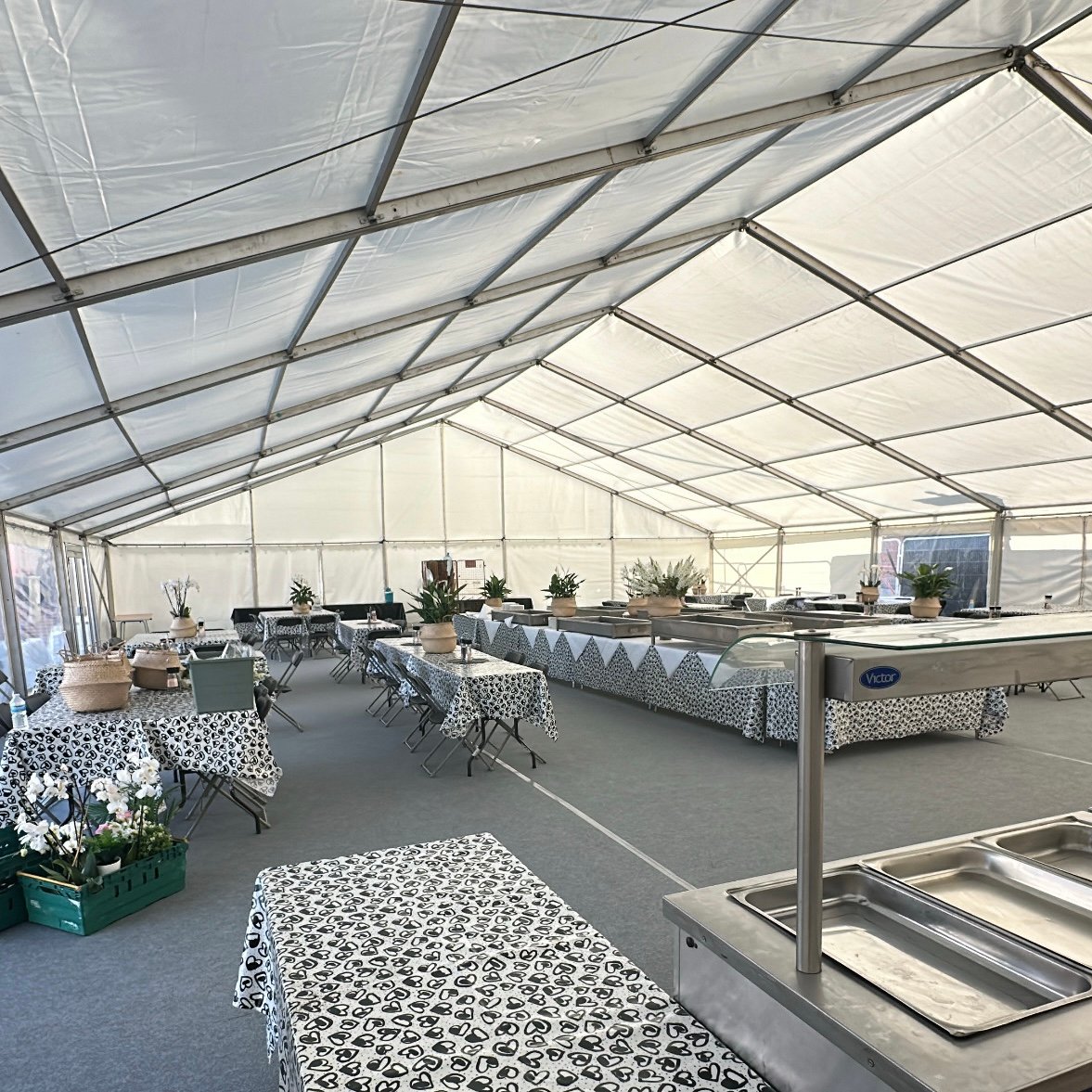
When people hear the word marquee, it’s understandable that they picture a temporary shelter for a wedding or private party.
But that’s only a small part of the story. Today’s temporary event structures are used to create conference venues, hospitality suites, exhibition halls, registration areas and operational spaces for organisations across Birmingham, the West Midlands and the UK.
For many businesses, they’re no longer simply an alternative to a venue—they’re becoming the venue.
A Different Way of Thinking
The biggest misconception about temporary event structures is that they’re simply large tents. In reality, they’re purpose-built environments designed around the needs of a specific event.Unlike a traditional venue, where you’re working within somebody else’s layout, a temporary structure allows the space to be designed from the ground up.
That means every entrance, hospitality area, exhibition stand and networking space can be positioned with purpose. If you’ve looked through our Corporate Marquee Hire projects, you’ll notice that no two installations are exactly the same—and that’s entirely intentional.
Events Have Changed
Corporate events today have very different expectations to those of even ten years ago. Organisations want branded experiences. Guests expect comfortable spaces that feel professional. Sponsors want visibility. Operations teams need practical working areas.
A single permanent venue doesn’t always provide that flexibility. Temporary event structures allow organisers to build an environment around the event itself rather than asking the event to fit the building.
Industry Insight
One of the biggest changes we’ve noticed is that organisations are no longer asking, “Where can we hold this event?”
They’re asking, “What environment do we need to create?”
It’s a subtle difference, but it completely changes the planning process.
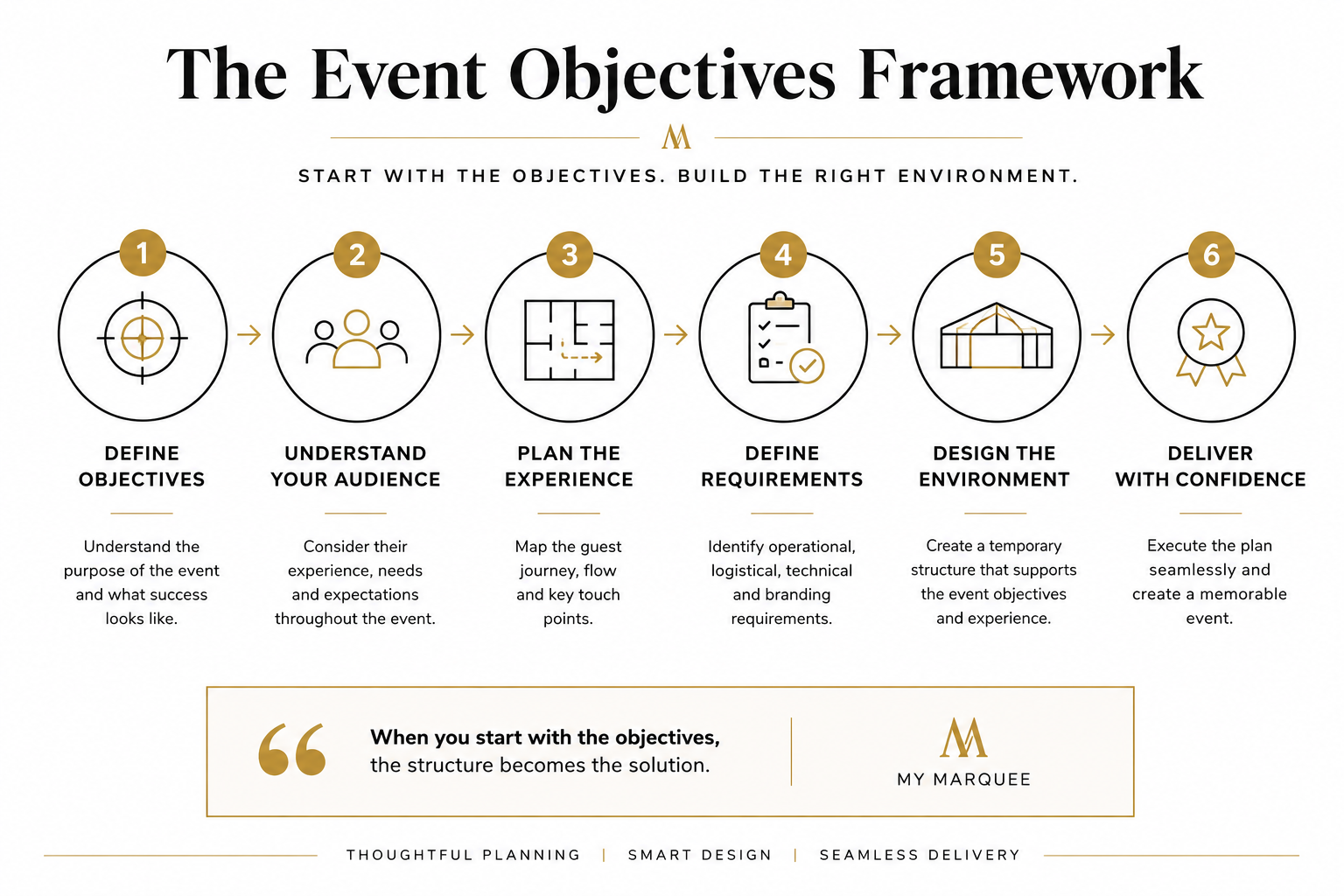
Start With the Event Objectives
One question we’re often asked is:
“What size marquee do we need?”
It’s a sensible question—but rarely the right place to begin. Instead, we encourage clients to think about what the event needs to achieve.Is it about networking? Launching a product? Entertaining key clients? Welcoming prospective students? Running an exhibition?
Once those objectives are clear, the right structure usually becomes obvious. The structure is the solution—not the starting point.
Guests See One Event. Suppliers See Another.
When guests arrive, they see the finished result. They notice the atmosphere, the lighting and the overall experience. Behind the scenes, however, every successful event depends on dozens of operational decisions.
Where do catering teams enter?
How will suppliers unload safely?
Can production crews work without interrupting guests?
Is there enough space for emergency access?
How will people naturally move through the venue?
These aren’t glamorous questions. But they’re often the reason one event feels effortless while another feels stressful.
Planning Removes Problems Before They Exist
One thing we’ve learnt over the years is that successful events rarely happen by accident. They’re the result of planning. We’ve been called after another supplier was unable to fulfil an event booking on the day.
We’ve worked through restricted site access with tight installation windows. Neither situation required panic. They required preparation. Building contingency into every project allows us to adapt when circumstances change, while keeping disruption to a minimum. That’s not luck. That’s planning.
Why This Matters
Temporary event structures aren’t simply about creating additional space. They’re about creating the right space. A space that supports guests. Supports suppliers. Supports operations. And ultimately supports the objectives of the event itself.
That’s why organisations increasingly see them as part of their event strategy rather than simply something to hire.
Did You Know?
Temporary event structures are regularly used for:
- Corporate hospitality
- Universities
- Sporting events
- Product launches
- Exhibitions
- Awards evenings
- Temporary dining facilities
- Staff welfare spaces
- Registration areas
- Brand activations
They’re far more versatile than many people realise.
How MY MARQUEE Approaches This
Before recommending any structure, we take a step back and ask a different question:
“How does this event need to operate?”
Every project is then planned around five principles:
- Layout
- Planning
- Delivery
- Guest Experience
- Handover
Only once we’re confident those foundations are in place do we begin specifying the structure itself. Because in our experience, successful events aren’t created by impressive marquees.
They’re created by thoughtful planning, operational precision and an attention to detail that guests may never consciously notice—but always experience.